How to Tame Nautilus in Minecraft
In this post you'll find valuable tips for taming the Nautilus in Minecraft. Learn where to find it, how to approach it without scaring it, and the benefits of using it as a mount and ally in aquatic battles. 🐚
The Nautilus in Minecraft is an aquatic mob that can be tamed and used as a mount, and it also has important functions in both exploration and underwater combat. Throughout this text, you will understand how to find it more easily and how to tame it properly. Check it out!
Where can I find the Nautilus in Minecraft?
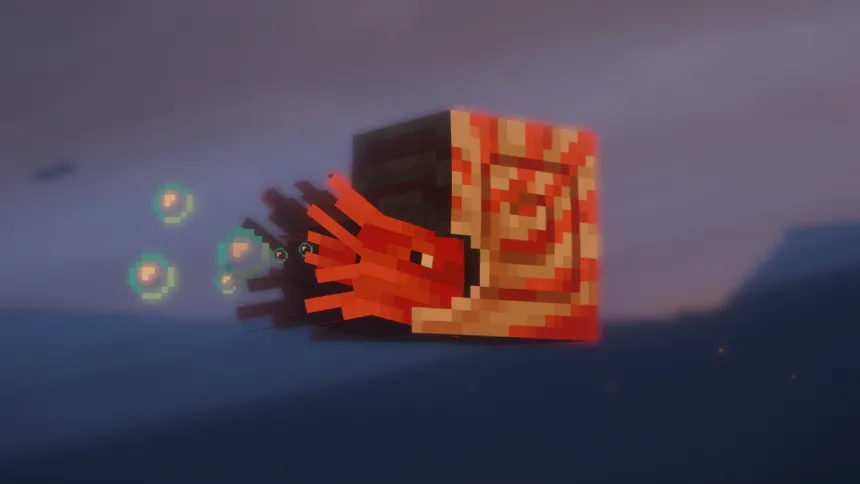
First of all, it's worth understanding where the Nautilus usually appears in Minecraft. It spawns in ocean biomes, generally in small groups. Depth also influences its appearance: look between intermediate water levels, without going too deep or staying only on the surface.
Cold waters greatly increase the chances of encountering them. Frozen areas or those near ice are good bets. When navigating these locations, pay attention to unusual movements in the water. Sometimes two or three appear together, which makes interacting much easier. An important tip: don't rush. Walking calmly through the water increases the chance of finding a group without scaring them away.
How do you tame a Nautilus?
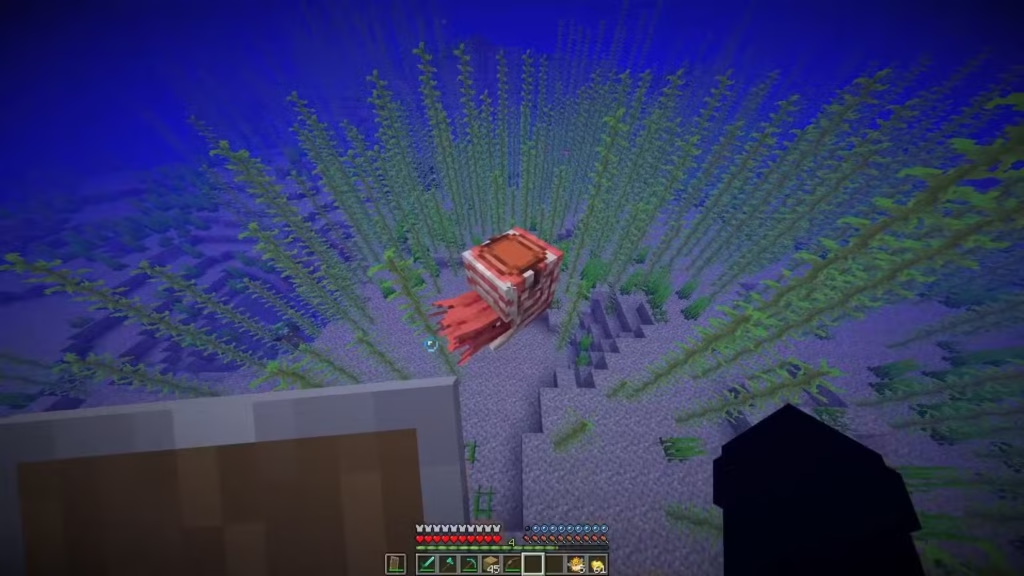
When you see the Nautilus in Minecraft, your first reaction might be to approach it quickly. But that doesn't always help. It doesn't usually attack without reason, so the best approach is to go slowly. Avoid sudden movements or unnecessary attacks. Its neutral behavior only changes in specific situations, such as when there are pufferfish nearby. Otherwise, a calm approach usually works well.
To begin taming, you only need a pufferfish or a bucket containing one. When you feed the Nautilus, hearts appear, indicating that it has come to trust you. This process doesn't require rare items or complicated strategies, making it quite easy. With patience, you can obtain more than one, even allowing reproduction between two individuals. When a baby is born , you'll see how the interaction brings more life to the aquatic environment.
How do I assemble the Nautilus in Minecraft ?
After being tamed, the Nautilus in Minecraft reveals one of its biggest advantages: it can be ridden. Simply use a saddle, just like with other animals. The feeling of swimming with it is completely different. The speed increases significantly, and you no longer need to worry about running out of air. In addition, there's a forward thrusting motion that helps with quick movements.
However, many people think that the Nautilus in Minecraft is only used for locomotion, but it also has uses in combat situations. There is a slot to equip armor on it , which increases its resistance.
These armors are not created directly. They appear in submerged locations such as shipwrecks, ruins, and hidden chests . They range from simpler materials to more resistant versions, with the possibility of later upgrades. With adequate protection, the Nautilus is a strong ally in aquatic confrontations, helping you deal with threats.
Next, another interesting aspect of the Nautilus in Minecraft is its shell. This item has a use and can be acquired by defeating the creature or other sea-related enemies. It is used to create the Conduit. With it active, you gain advantages such as continuous breathing, better vision, and greater mining efficiency. Furthermore, the Conduit also attacks nearby enemies, creating a protected area around them.
And what about the Zombie Nautilus?
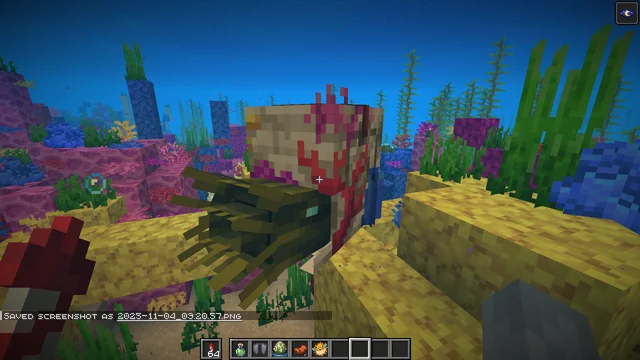
There is also a rarer variation: the zombie version of the Nautilus in Minecraft . It appears with different details on its shell, such as moss or coral. It usually appears accompanied by an armed Drowned, making the encounter more dangerous. After defeating this enemy, the Nautilus returns to normal behavior and can be tamed.
Despite this, it does not reproduce and has differences in the items it drops when defeated. Even so, it remains an interesting creature to collect for rare variations.
By better understanding the Nautilus in Minecraft , you realize that it's not just another ocean creature, but an ally that changes your relationship with the underwater world. From the moment you learn where to find it to taming it and using it as a mount, everything becomes better underwater.